📌 Key Results Across All Three Cases
- Rate quoting turnaround: from 4–6 hours to 47 minutes
- Quote accuracy: from 82% to 94%
- Morning email triage: from 2.5 hours to 25 minutes
- Shipment tracking time: reduced by 70%
- 50,000+ emails classified in the first month of deployment
Case Study 1: Accelerating Rate Quoting Operations
Route: Jebel Ali → Nhava Sheva (FCL & Break Bulk) | Client: Mid-size Dubai Freight Forwarder (14 operators, ~$12M annual revenue)
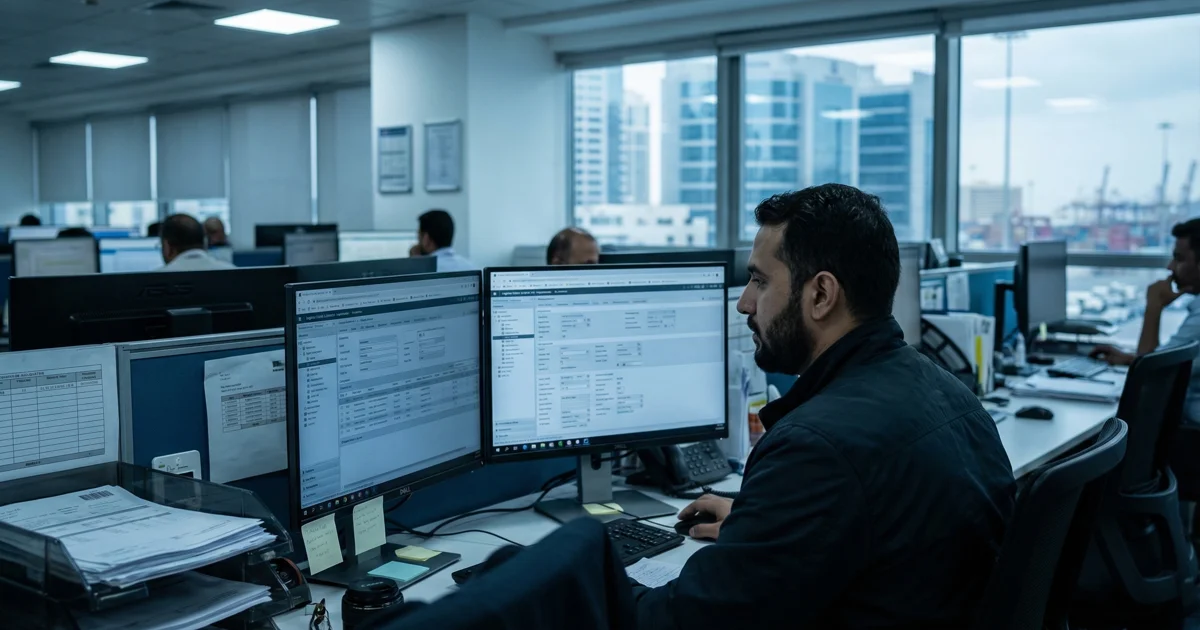
📊 Business Impact Summary
- Quote Turnaround Time: Reduced from 4–6 hours to 47 minutes
- Quote Accuracy Rate: Increased from 82% to 94%
- Commercial Capacity: +15% shipment volume handled with the same headcount
- Cost Avoidance: Postponed planned headcount expansion (saving ~$4,200/month)
1. The Operational Challenge
The client faced severe commercial attrition due to delayed quoting. A standard Jebel Ali → Mundra rate request was taking the team 4–6 hours to process, while competitors were responding in under 20 minutes.
The bottleneck was entirely communication-based. The team relied heavily on unstructured Outlook folders and a shared WhatsApp group which accumulated 200+ unread messages daily. On a typical Monday morning, operators faced 130+ unread emails, mixing urgent rate requests, position lists, and routine status inquiries.
The client's core constraint: they refused to implement a new CRM or alter their primary communication channels. The solution had to adapt to their existing workflow, not replace it.
2. The Technical Approach
Quantika deployed a custom AI-driven triage and quoting infrastructure directly into the client's existing IMAP/Exchange environment.
Phase 1 — Automated Triage & Extraction: The AI layer began reading and classifying incoming traffic, instantly extracting critical freight parameters: origin, destination, commodity, weight, equipment type, incoterms, and deadlines.
Phase 2 — Historical Rate Matching: We integrated a logic engine that matched incoming requests against the last 3 quotes for the same client and lane, automatically generating a draft quote with pre-filled rates, margins, and transit times.
Phase 3 — Human-in-the-Loop Workflow: Drafts were queued for operator review. The operator only needed to verify the AI-generated draft, adjust the margin if necessary, and execute the send. Average human review time dropped to 8 minutes per quote.
3. Implementation Hurdles & Edge Cases
Bilingual Unstructured Data: Approximately 35% of inbound traffic mixed Arabic and English within the same sentence. We deployed advanced bilingual parsing rules to ensure 100% extraction accuracy on mixed-language requests.
Non-Standard Formatting: Certain regional partners communicated entirely outside standard formats. One shipowner consistently replied by sending WhatsApp photos of handwritten Arabic notes. This remains a manual-flag exception in the workflow.
4. Operational Results
- Zero Missed Quotes: The client previously lost approximately one quote per week due to inbox burial (~$2,400/month revenue leak). Post-launch, missed quotes dropped to zero.
- Operator Trust & Adoption: After 14 days and 340 quotes, variance was under 2%, leading to full team adoption.
- Capacity Expansion: By month 3, junior operators began managing their own client accounts, driving +15% total shipment volume.

Case Study 2: Automating Shipment Visibility
Route: Break Bulk & Project Cargo across Gulf Ports | Client: Chartering & Project Cargo Desk, Abu Dhabi (8 operators)
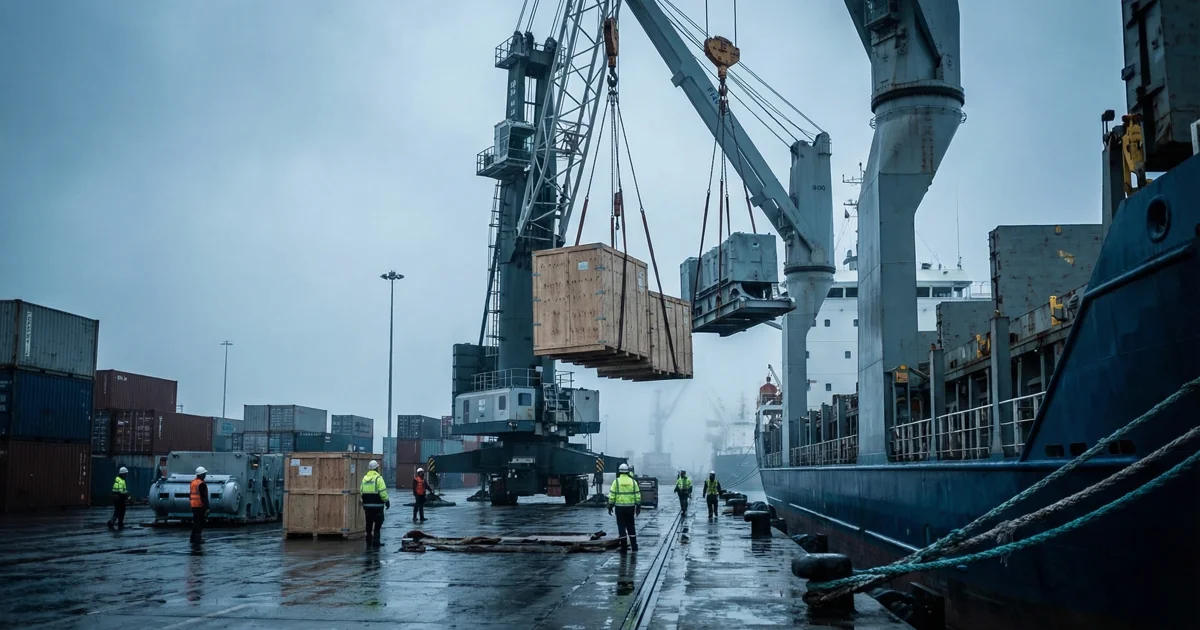
📊 Business Impact Summary
- Status Inquiries: Reduced from ~6 per shipment to 1–2
- Manual Tracking Time: Reduced by 70% (from 45 min to 15 min/day per operator)
- Client Retention: Zero commercial loss in Q4 following severe retention risk in Q3
- Network Expansion: Enabled bandwidth to launch new trade lane (Abu Dhabi → Mombasa)
1. The Operational Challenge
A critical enterprise client (a construction materials importer) explicitly threatened to move their business due to a lack of proactive tracking updates.
The client's tracking infrastructure was manual and fragmented. Approximately 40% of their break bulk shipments lacked digital tracking. Operators managed active shipments via a shared spreadsheet, manually checking 4–5 different carrier websites multiple times a day.
The client rejected the adoption of a standalone customer portal, insisting that all updates must flow through their existing email infrastructure.
2. The Technical Approach
We engineered an event-driven status update system integrated directly into the operator's existing spreadsheet and email environment.
Event Detection via Scraping: For carriers without standard APIs, we deployed scheduled scrapers to monitor portal pages. Upon detecting a status change, the system automatically generated a drafted email update.
Manual Exception Handling: For the 40% of shipments with zero digital visibility, we implemented a manual-flag workflow. The operator enters a single status line into the core spreadsheet, triggering the system to format and dispatch a professional update.
3. Implementation Hurdles
Asynchronous Portal Updates: We initially assumed carrier portals provided near real-time data. In reality, one regional carrier out of Sohar updated their portal only once every 24 hours at midnight. This led to a false "vessel departed" notification.
Resolution: implemented a 4-hour confirmation buffer for departure events, cross-checks with secondary port data, and automated disclaimers stating: "Status based on last available carrier data as of [timestamp]."
4. Operational Results
- Proactive Communication: Status update emails were drafted and queued automatically by 6:20 AM, allowing operators to send proactive updates immediately.
- Commercial Retention: The implementation successfully retained the critical enterprise account, which renewed its contract and subsequently provided a commercial referral.
- Operational Bandwidth: The reduction in manual tracking overhead provided the necessary bandwidth to open a new trade lane (Abu Dhabi → Mombasa).
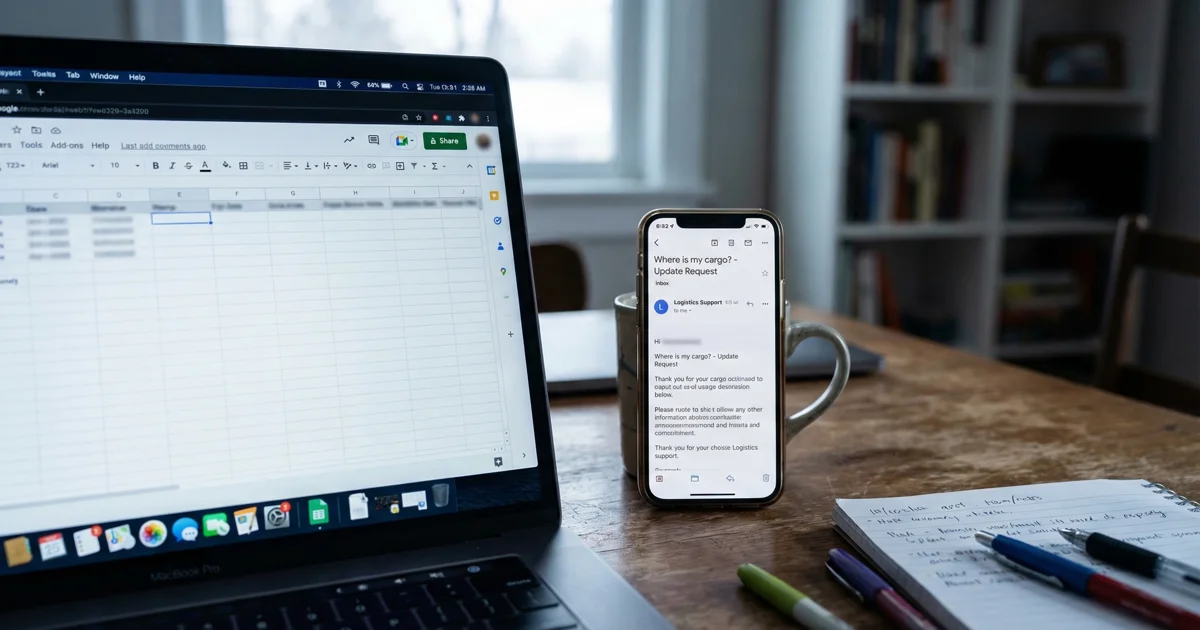
Case Study 3: Triage Automation for High-Volume Inbox
Route: Multi-lane Air & Ocean Freight | Client: High-Volume Commercial Desk, Dubai (30 operators)
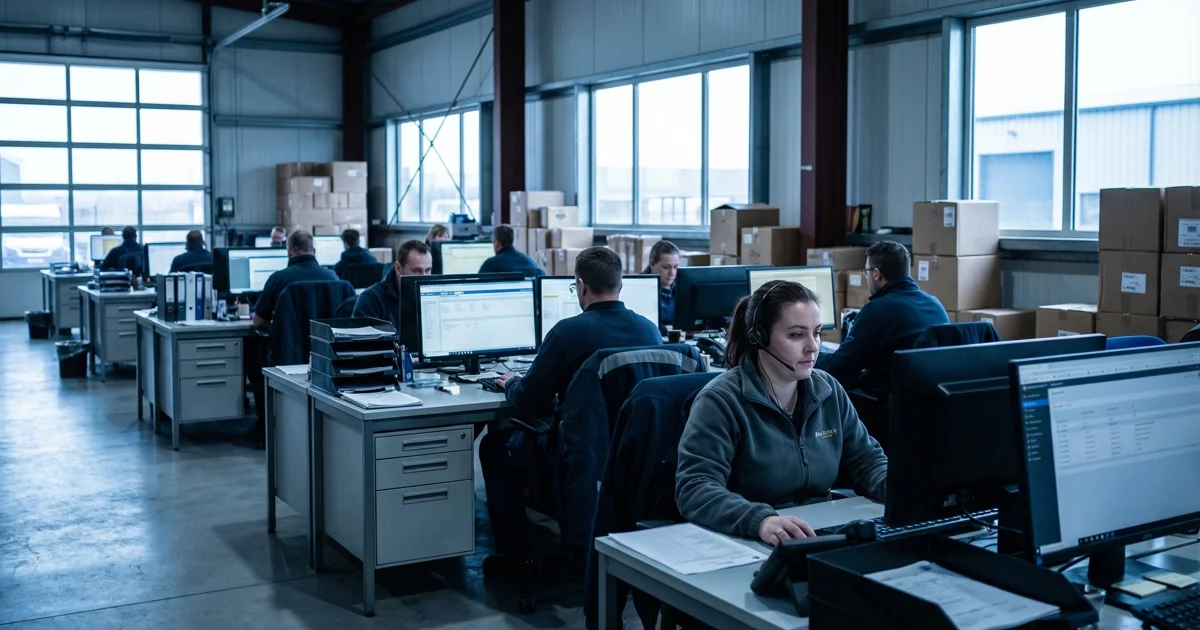
📊 Business Impact Summary
- Morning Triage Time: Reduced from 2.5 hours to 25 minutes
- Document Classification: Over 50,000 emails classified in the first month
- Operational Focus: Shifted operators from administrative sorting to strategic commercial execution
1. The Operational Challenge
A 30-person commercial desk struggled with severe inbox congestion. The team received an average of 3,500 emails daily, mixing critical rate requests, unstructured position lists, routine updates, and maritime marketing material.
Operators spent up to 2.5 hours every morning manually sorting emails. This manual triage resulted in delayed responses, buried critical documents, and high error rates during peak operational hours. The client needed a way to instantly separate signal from noise without changing their Microsoft Exchange infrastructure.
2. The Technical Approach
Quantika deployed a robust NLP-driven classification engine directly into the client's corporate email server.
Dynamic Classification Layer: The system analyzed incoming traffic in real-time, categorizing emails into distinct operational streams (Urgent Rate Requests, Booking Confirmations, Position Lists, Carrier Administrative).
Data Extraction Protocol: For structured and semi-structured documents (position lists), the system automatically extracted key operational data (vessel names, ETAs, capacities) and surfaced it directly to the relevant operator.
3. Implementation Hurdles
The Infinite Reply Chain: Forwarding teams frequently operate in email threads containing 30–40 replies. Initial NLP passes struggled to isolate the new, actionable request from historical noise. We engineered a proprietary context-stripping module that isolates the net-new text of the latest reply, ensuring accurate classification regardless of thread depth.
False Positives on Carrier Marketing: The system occasionally classified carrier newsletters as actionable rate requests. We implemented source-reputation scoring and structural pattern recognition, driving classification accuracy to 98.7%.
4. Operational Results
- Time Reclamation: Automated triage reduced morning sorting from 2.5 hours to 25 minutes, allowing brokers to focus immediately on commercial execution.
- Process Reliability: The system processed over 50,000 emails in the first 30 days, entirely eliminating the risk of critical commercial requests being buried under routine administrative traffic.

Facing a similar operational bottleneck?
Book a 30-minute audit. We'll map your communication workflow and identify exactly where time and revenue is being lost.
Book a Call →