📌 Key Takeaways
- The biggest problem is not lack of tracking — it's the gap between ops data and what the customer understands
- 96% of dissatisfied B2B customers leave silently; 32% leave after a single negative experience
- 50% of customers blame poor communication more than price, fees, or item condition
- Tracking tells you where freight is — communication tells the customer what that means
- In Dubai, fragmented handoffs across port, customs, free zone, and GCC legs make the gap worse
A lot of freight teams think they have a visibility problem. In reality, they have a communication gap.
The difference matters. Cargo tracking software can tell you where the freight is, what milestone fired, and maybe the latest ETA. That is useful. But it does not automatically tell the customer what that means, whether the delay is serious, what happens next, or what the forwarder is doing about it. And that is exactly where trust breaks.
This is why silence in freight forwarding is often more expensive than the delay itself. A shipment can be late and still manageable if the customer understands what is happening. A shipment can also be technically on track and still feel like a failure if the customer hears nothing.
The communication gap that loses clients silently
The communication gap is what happens when the forwarder has information, but the customer still feels blind.
That gap is wider than many teams admit. An operations desk may know that the shipment is sitting pending inspection, waiting for gate release, or rolling to the next feeder. The customer, meanwhile, sees silence. Or worse, sees a tracking event with no explanation.
According to Freightify survey data, 78% of shippers say customer service is very important to their business. That alone tells you the buying decision is not purely about price or capacity.
Broader logistics-adjacent proxy data points in the same direction. According to DispatchTrack, 50% of customers blame poor communication for bad delivery experiences more often than they blame price, fees, or item condition.
The B2B churn proxy is even more uncomfortable. According to Bliro, 70% of B2B churn is driven by poor service, 96% of dissatisfied customers leave silently, and 32% leave after a single negative experience.
That is why the communication gap loses clients silently. Not with one dramatic blow-up, but with repeated moments where the forwarder knows something and the customer still feels abandoned.
Why "no news" is the worst news for your shipper
Freight people often say, "No news is good news." Customers usually hear the exact opposite.
For the shipper, no update rarely feels neutral. It feels like uncertainty. If the customer has cargo moving through a congested port, waiting on customs release, or sitting between legs of a multimodal move, silence creates its own story.
According to Descartes, one of the biggest causes of high inbound inquiry volume in logistics is the absence of proactive communication. To significantly reduce status-chasing behavior, businesses have to move from reactive customer service to proactive communication.
Armstrong Transport adds an important human counterpoint: best practice is to run a check call at least once a day per load, and more often for over-dimensional or high-value freight. Even with digital tracking in place, the highest customer-service standard still involves person-to-person communication.
This is where many teams underestimate the emotional cost of silence. The customer is not just waiting for freight. They are waiting for certainty.
Dealing with the same challenge?
Book a free 30-min call — we'll map your email workflow together.
Book a Free Call →What shippers actually want (it's not GPS coordinates)
Most shippers do not really want more raw tracking data. They want fewer moments of uncertainty.
According to Logixboard, shippers increasingly expect 24/7 access to real-time information and want their logistics providers to act like strategic partners rather than reactive problem-solvers.
A customer does not gain much from a pin on a map if they still need to ask: Is the shipment late in a way that matters? Is customs the issue or the feeder? Has the release happened or only the inspection? Do I need to notify my consignee? Are you already working on an alternative?
Tracking tells you where the freight is. Communication tells the customer what that means.
Tracking answers: Where is the shipment? What event fired? What is the ETA?
Communication answers: What does this mean for the customer? What happens next? Who is doing what right now? Is any action needed from the shipper?
This is why many SMB forwarders still feel exposed even when they have some form of tracking in place. The market has built plenty of ways to show the event. It has not built enough forwarder-to-customer communication infrastructure to explain the event.
The real cost of reactive communication
Reactive communication is expensive in ways that do not always appear in the P&L right away.
The first cost is internal noise. When the customer does not get a proactive update, they send the status-chasing email. Then sales asks ops for an answer. Then customer service checks with transport or customs. One missing proactive update turns into several inbound touches — the same pattern that makes slow quoting so expensive.
The second cost is confidence erosion. The shipment may still be salvageable. The customer relationship may not be.
The third cost is decision delay. If the customer does not understand what is happening, they cannot plan the next move confidently. They may delay internal handoffs, postpone consignee commitments, or escalate unnecessarily.
The fourth cost is silent churn. This may be the most dangerous. According to Bliro's B2B proxy data, most dissatisfied customers do not complain. They simply leave. In freight forwarding, that means the communication gap may not show up as a loud argument. It may show up as fewer RFQs next quarter.
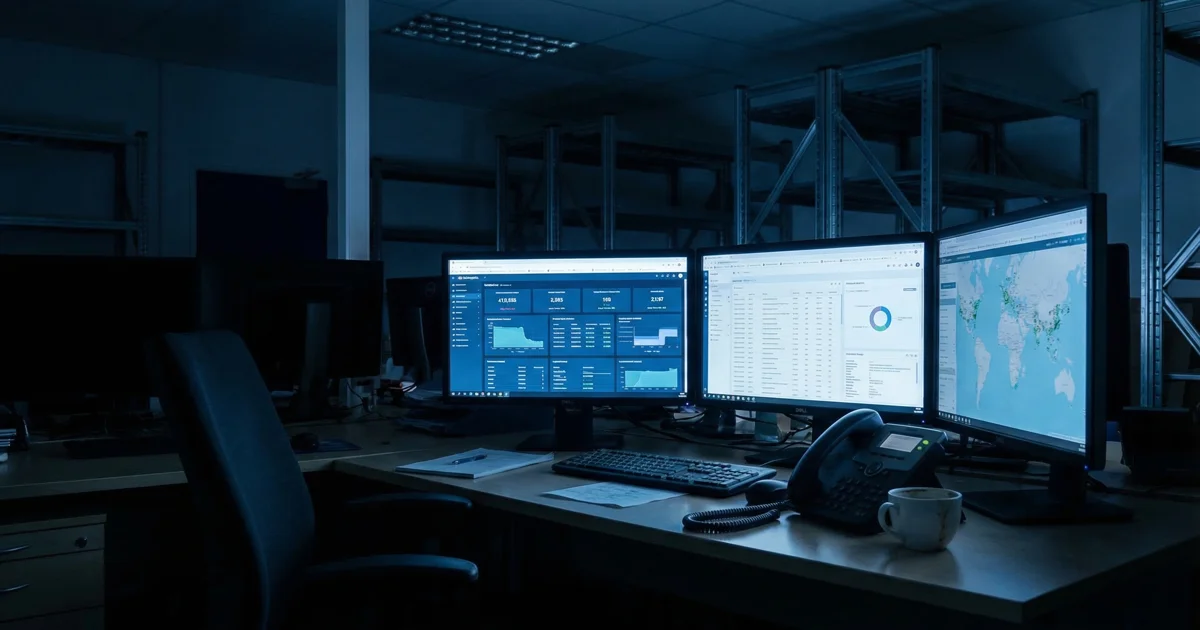
And finally, there is the false comfort of cargo tracking software itself. A team may believe it has solved communication because there is a portal, a map, or a tracking screen. But if customers still have to ask "what does this mean?" then the communication problem is still alive. It just looks more modern.
What proactive freight communication looks like

Proactive freight communication is not just "more updates." It is better-timed, more contextualized updates.
1. It is exception-led
Routine status noise should not overwhelm the customer. But genuine exceptions should trigger fast, contextual updates. If customs inspection has started, if release is delayed, if the feeder rolled, if the gate appointment slipped — the customer should hear that before they ask.
2. It explains meaning, not just status
"Shipment delayed" is not enough. A useful update says what happened, what it changes, what is being done, and what the customer should expect next.
3. It gives one accountable contact
According to FLEX Logistics, one of the strongest communication expectations is a dedicated point of contact. Communication breaks down fastest when the customer does not know who owns the update.
4. It reduces internal chasing
Strong communication should work both externally and internally. Sales should not have to call ops for every update. Customer service should not have to guess whether customs, port, or transport owns the next action.
5. It respects calendar and operational reality
Customers do not just need updates. They need updates that reflect actual operating conditions — especially in regions like MENA where calendar effects matter. This is where response time discipline becomes a communication advantage.
How Dubai forwarders are closing the gap

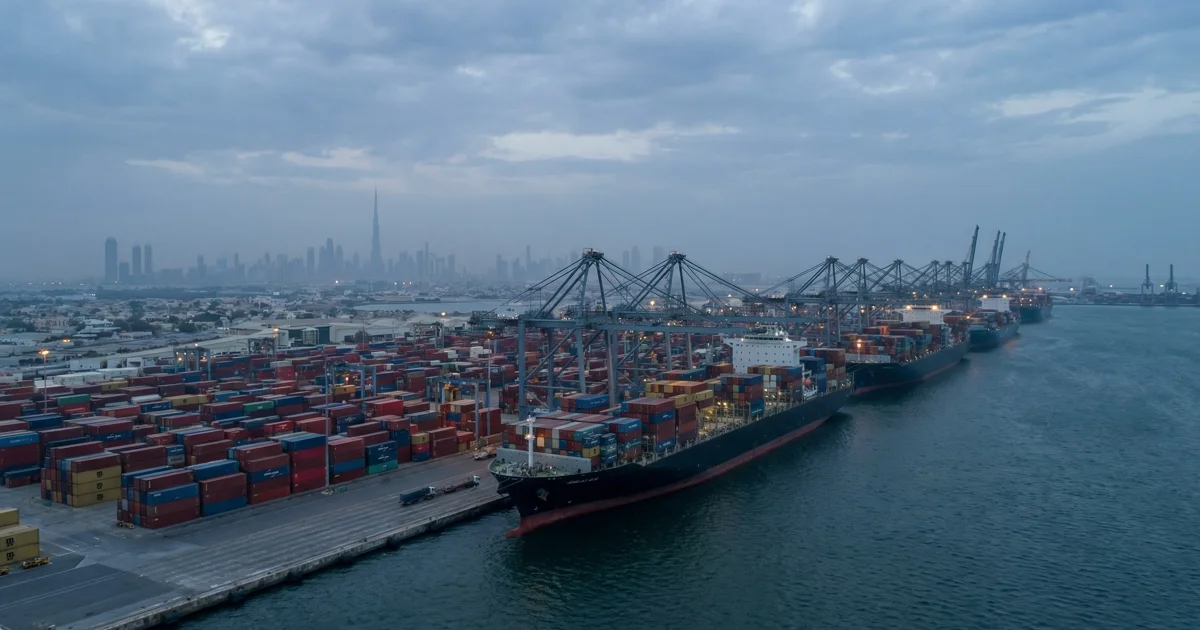
Dubai is one of the clearest examples of why the communication gap matters.
This is not a simple single-touch supply chain. In the UAE and across the GCC, shipment visibility can break at every handoff between port, customs, free zone, mainland, trucking allocation, and cross-border movement. According to DP World, Jebel Ali combines sea, air, and land access with strong multimodal connectivity — powerful operationally, but more complex from a communication standpoint.
Dubai Customs adds another layer. The system includes multiple distributed customs processing locations, including Jebel Ali & TECOM, Dubai Logistics City, Airport Free Zone & Silicon Oasis, Hatta Border, and Dry Port. A shipment may appear "stuck" to the customer while actually moving through a fragmented administrative path.
Ramadan makes the issue even sharper. According to Sea Prince Logistics, government offices and customs departments often work reduced hours during Ramadan, and administrative processes like documentation approvals, customs inspections, and release notes can slow down. Companies failing to plan for Eid can face 3–7 day cascading delays.
The strongest Dubai forwarders are changing how they communicate:
- They treat handoff updates as customer-critical, not internal trivia
- They explain whether the delay sits at port, customs, free zone, trucking, or release stage
- They communicate expected next action, not just current status
- They adapt communication rhythm during Ramadan, Eid, and peak pressure periods
- They create one accountable path for escalation across multi-party movements
In other words, they do not just buy visibility. They operationalize communication.
Self-check: does your team have a communication gap?
If you want to know whether your team has a communication gap, do not start by asking whether you have tracking. Start by asking whether your customer understands what your tracking means.
- Do customers still ask "Any update?" even when tracking data exists?
- Do status updates explain what a delay means, or do they only repeat milestone data?
- Does sales regularly chase ops for shipment updates on behalf of customers?
- Do customers have one clear point of contact for escalation?
- Can your team distinguish between routine milestones and customer-critical exceptions?
- During Ramadan or holiday periods, do communication delays become visibly worse?
- Do updates explain the next step, owner, and likely timing?
- In Dubai handoffs, can customers tell whether the issue is at port, customs, free zone, or trucking stage?
- Does your team wait for the customer to ask before sending important updates?
- If a customer complained today, would you be able to show a clean communication history?
If you answered "yes" to three or more risk signals, the communication gap is probably already hurting your desk. If five or more — it is a workflow problem, not an individual responsiveness issue.
FAQ
What is the communication gap in freight forwarding?
The communication gap is the space between what the forwarder knows operationally and what the customer actually understands. Tracking data may exist, but the customer still lacks context, meaning, and next steps.
Is cargo tracking software enough for customer updates?
No. Cargo tracking software shows location, events, and ETA — not what those events mean for the customer or what action the forwarder is taking.
Why do customers leave because of poor communication?
Because silence creates uncertainty. Customers can often tolerate delay better than they tolerate being ignored or forced to chase updates with no clear answer.
What do shippers really want from shipment visibility?
They want proactive, contextual updates — not just raw milestone data. They want to know what changed, what happens next, and whether action is needed.
Why is the communication gap worse in Dubai and MENA?
Because freight movements often involve more handoffs across port, customs, free zone, mainland, and GCC transport legs. During Ramadan and peak periods, reduced administrative hours can make the gap even wider.
Conclusion
The biggest problem in freight forwarding is not that customers cannot see enough. It is that they often do not understand what they are seeing.
That is the communication gap. And it is why silence often costs more than the delay itself.
Cargo tracking software can show the event. But forwarders still need a way to translate that event into clarity, next steps, and confidence. That is the missing layer.
For teams in Dubai and across MENA, closing that gap is no longer optional. The handoffs are too complex, the customer expectations are too high, and the cost of reactive communication is too real.