📌 Key Takeaways
- The UAE freight forwarding market generated ~$6.96B in 2024, growing to $8.64B by 2030 — competition is intense
- Average manual quote turnaround from leading forwarders is ~57 hours
- 17% of customers abandon after a single reliability failure
- Six bottlenecks kill quote speed: intake, extraction, rate sourcing, markup, approval, assembly
- A 30-day cleanup plan can make delay visible and fixable without hiring
If you want to reduce response time in freight forwarding, the first move is not hiring more people. It is removing the minutes that disappear between inbox intake and quote delivery. In most forwarding teams, slow replies are not caused by lazy staff. They are caused by broken quote workflows: incomplete emails, scattered rates, manual approvals, and too much rework before a shipper gets a usable answer.
For a freight forwarder in Dubai or a regional operator serving the wider MENA market, that delay is expensive. You are not operating in a quiet niche. You are competing in a multi-billion-dollar market with aggressive regional and global players, high shipment complexity, and customers who can request three more quotes before your team finishes opening the original email.
This guide breaks down where the response time goes, how to cut it without adding headcount, what "fast enough" really means if you want speed without margin leakage, and what a practical first 30 days of cleanup looks like.
Why response time is the new competitive edge in freight forwarding
In freight forwarding, quote speed used to be a service metric. Now it is a survival metric.
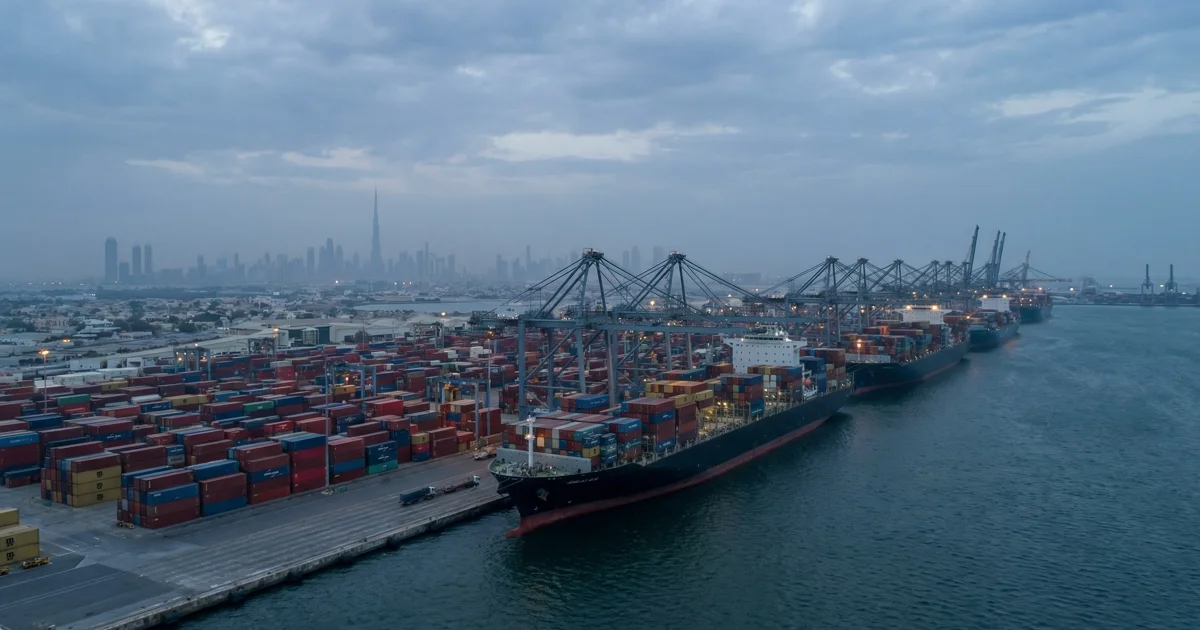
Dubai is one of the most competitive freight environments in the region. According to Grand View Research, the UAE freight forwarding market generated about USD 6.96 billion in revenue in 2024 and is expected to reach USD 8.64 billion by 2030. According to press reporting based on CoherentMI data, the UAE also operates with more than 40 free zones, which increases the number of trading entities, routing options, and forwarding competitors in play.
That means more quote requests, more repeated lanes, more urgent spot requests, more exceptions, and more pressure on freight forwarder email response time.
A shipper asking for a rate from Jebel Ali to Nhava Sheva or a time-sensitive airfreight move through Dubai South is rarely waiting on one forwarder. They are usually checking who answers first with something clear, credible, and usable. Industry sources consistently describe the same pattern: slow response kills momentum long before price comparison is finished.
This is why the old mindset — "we'll answer once ops clears the backlog" — is dangerous. The backlog is the problem. If the quote only goes out once your team has time, then your speed is being dictated by internal clutter rather than customer urgency.
For a 50–100 person freight company, that is where deals quietly leak away. Not because the company lacks customers, lanes, or capability, but because the shipper experiences silence where they expected movement.
The hidden cost of slow replies
The visible cost of slow replies is lost quotes. The hidden cost is much larger.
First, slow replies weaken trust. SupplyChainBrain, citing Voxware survey data, reported that 17% of customers abandon a retailer after a single late delivery, and 55% will abandon after two to three late deliveries. That is delivery research, not quote-response research, but the lesson still matters: reliability failures are remembered, and they change customer behavior fast.
In freight, delayed quoting sends a similar signal. If a shipper has to chase you for a basic rate, they start assuming the same friction will show up later in booking, documentation, and updates.
Second, slow replies reduce win probability even before the quote is evaluated. According to industry implementation data cited in vendor research, faster tendering can improve turnaround by 60–80%, with payback on workflow improvements often reported in the 3–6 month range.
Third, slow replies create internal waste. Every delayed quote generates extra follow-up traffic and turns one request into repeated inbox pressure. That is why slow response is not just a sales problem. It is an operational multiplier. The slower the team replies, the more inbound noise the same request creates.
Dealing with the same challenge?
Book a free 30-min call — we'll map your email workflow together.
Book a Free Call →Where minutes get lost: the quote response workflow
Most teams think they have a response-time problem. In reality, they have six smaller problems stacked together.
A quote request does not move from inbox to customer in one clean step. It usually moves through a chain that looks like this:
email intake → data extraction → rate sourcing → markup → approval → quote assembly → outbound follow-up

1. Email intake
The first delay happens before quoting starts. Requests sit in a shared inbox, or they get opened without clear triage on whether they are fresh RFQs, repeat-lane checks, or incomplete inquiries. If one experienced person is still acting as human router, that person becomes the bottleneck.
2. Data extraction
Most shipper emails arrive messy. Important fields like origin, destination, dimensions, quantity, or incoterms are buried in text, attachments, or screenshots. According to Sedna's workflow guidance, extracting those fields into a standard view is one of the main friction points in quote handling.
3. Rate sourcing
This is where many teams lose the biggest chunk of time. Rates sit across spreadsheets, old emails, and personal folders instead of one trusted source. According to GoFreight's industry guidance, an accurate and up-to-date rate database is essential if you want quotes to stay both competitive and profitable.
4. Markup logic
Finding the buy rate is not enough. The team still needs to apply markup, local charges, and lane-specific assumptions, often manually. That creates inconsistency and slows the desk down.
5. Approval
Approval is often underestimated. If every non-standard quote waits for one senior reviewer, response speed is limited by that person's availability, not the urgency of the shipper.
6. Quote assembly and outbound follow-up
The last delay comes from assembling the quote, checking it, and sending it in a usable format. Magaya's vendor data claims teams can save about 15 minutes per quote by reducing manual quote-building steps. That is vendor data, not a neutral benchmark, but it captures a real issue: repetitive formatting work is slower than most teams admit.
Put all six steps together, and that is where the minutes go. Not in one dramatic delay, but in a chain of small frictions that add up to hours.
5 ways to cut response time without adding headcount
You do not fix slow quote response by telling the team to "move faster." You fix it by reducing the work required to get from inquiry to answer.
1. Build one trusted rate source
If buy rates live across inboxes and spreadsheets, speed will always depend on memory. A centralized, searchable rate source removes the "who has the latest number?" delay. According to GoFreight's industry guidance, both speed and pricing accuracy improve when teams work from a single current rate source.
2. Standardize quote structure and markup rules
Fast quoting gets easier when the team is not rebuilding the same logic each time. Standard templates, lane assumptions, and pre-agreed markup bands reduce both approval load and avoidable back-and-forth.
3. Use AI email extraction for low-value reading work
The strongest use of AI here is not replacing forwarders. It is extracting structured details from messy inbound emails. Teams can pull origin, destination, quantity, and incoterms into a standard view instead of wasting time re-reading threads.
4. Use live carrier rate access on the lanes that justify it
Static rates age badly in volatile markets. Fixed rates can leave pricing too high or too low. Not every lane needs live data, but high-volume spot lanes often do.
5. Treat the shared inbox like an operating workflow
A shared inbox should be a controlled queue, not a dumping ground. Clear ownership, visible status, and response targets help managers see whether delay is happening at intake, sourcing, or approval stage. You cannot remove delays you cannot see.
These five levers matter because they attack the delay at its source. A freight forwarder in Dubai does not need more inbox chaos handled faster. It needs less chaos reaching human hands in the first place.
What "fast enough" actually means — speed vs accuracy vs margin
Fast is not the same as good.
A quote sent in five minutes is useless if it is wrong, unprofitable, or missing critical assumptions. Speed without discipline creates margin leakage.
That is why the right benchmark is not "send everything instantly." It is "respond fast enough to stay in the deal, while keeping accuracy and margin under control."
A simple maturity model helps here:

| Level | Description | Speed |
|---|---|---|
| Spreadsheet shop | Rates live in Excel. Accuracy depends on who is online. | Inconsistent |
| Semi-digital | Shared templates and partial databases. Key bottlenecks with senior staff. | Improving |
| Connected workflow | Carrier data, rate logic, and quoting connected. Less manual sourcing. | Consistent |
| AI-assisted | Inbound requests parsed faster, repetitive building reduced. | Fast + predictable |
But each maturity level creates a trade-off. If you chase speed without guardrails, you risk stale rates, bad surcharge logic, inconsistent markup, underquoted local charges, and costly approval misses.
That is why the KPI trio matters: speed, accuracy, margin. If one improves while the other two collapse, you have not really improved the operation.
How Dubai freight forwarders are solving this today
Dubai makes this challenge harder — and more urgent.
This is not a simple one-port market with predictable, single-mode cargo. Forwarders in Dubai deal with Jebel Ali port flows, JAFZA-linked trade, airport cargo, cross-border GCC routing, free-zone cargo handling, and multi-modal moves that can combine sea, land, and air in one customer journey. The UAE operates more than 40 free zones, which expands both the customer base and the operational variability of quote handling.
That matters because a quote for a repeat FCL lane out of Jebel Ali is one thing. A quote involving free-zone handling, customs-sensitive cargo, time-critical trucking into Saudi, or a mixed-mode routing through Dubai South is another.
The better Dubai teams are solving this in practical ways:
- They separate repeat-lane pricing from complex one-off requests
- They keep lane logic close to the desk instead of buried in individual inboxes
- They standardize quote structure for common Jebel Ali and JAFZA-related flows
- They use human approval where complexity is real, not on every routine request
- They focus senior staff on exceptions, not inbox triage
Ramadan makes this even sharper. In practice, many teams operate on shorter effective working hours while cargo pressure, customer expectations, and quote volume do not fall in proportion. If the desk loses even two productive hours a day during a high-pressure period, the same inbox volume gets compressed into a smaller working window. That turns a manageable quoting queue into a same-day bottleneck.
Action plan: your first 30 days
If you want to improve response speed, do not start with a massive redesign. Start with one month of disciplined cleanup.
Days 1–7: Measure the actual delay
Pull a sample of recent RFQs and track how long each stage took: inbox intake, rate sourcing, approval, quote assembly, and final send. You are looking for the biggest recurring bottleneck, not the most dramatic one-off failure.
Days 8–14: Fix the top two friction points
If the desk is losing time in rate lookup, consolidate the most-used lanes into one trusted source. If the delay sits in inbox triage, create clear ownership and a visible queue for fresh quote requests.
Days 15–21: Separate standard from exception work
Create one lane for repeat, routine requests and another for non-standard, margin-sensitive, or operationally complex quotes. This single step often removes a large amount of unnecessary waiting.
Days 22–30: Set response rules and review daily
Define what counts as first response, what needs approval, and what should move without senior review. Then review quoting speed every day for one month. Not weekly, not eventually — daily. The goal is to make delay visible while the team can still correct it.
This 30-day plan will not solve everything. But it will show you whether the real issue is intake, rate access, approvals, or quote-building friction. Once that is visible, improvement becomes a management job instead of a guessing game.
FAQ
How can freight forwarders reduce response time without hiring more ops?
By removing friction from the quote workflow. The biggest gains usually come from better rate access, cleaner inbox handling, and faster extraction of quote details from inbound emails.
What slows down freight forwarder email response time the most?
Usually a combination of unstructured inbound emails, scattered rate sources, manual approvals, and repetitive quote assembly. The delay is rarely caused by one issue alone.
What is a good response time for a freight quote request?
There is no verified public freight-wide benchmark. In practice, the goal is to respond fast enough to stay in the buying conversation while preserving accuracy and margin. For many teams, that means moving from multi-hour response to same-hour response on standard lanes.
What should be improved first: rates, inbox, or approvals?
Start with the biggest bottleneck in your current workflow. For many forwarders, that is rate sourcing or inbox intake. If the request is delayed before quoting even begins, no downstream improvement will solve the core issue.
Conclusion
If you want to reduce response time in freight forwarding, stop treating it like a staffing problem first.
In most teams, the real issue is workflow drag: messy inboxes, incomplete requests, scattered rate data, slow approvals, and too much manual quote assembly. Remove those minutes, and the team gets faster without adding more people.
That is what matters in a competitive Dubai market. Not just answering faster, but answering fast enough to stay credible, protect margin, and win more of the requests already landing in your inbox.