📌 Key Takeaways
- Manual quoting can take 30 minutes to 48 hours per quote — most of that time is waste, not judgment
- The 7 most common mistakes: missed surcharges, stale rates, wrong dimensions, FX errors, missing Incoterms, copy-paste typos, incomplete shipper data
- Carrier rate validity has shrunk from months to as little as 2 weeks
- Dubai adds FX timing risk, local charge fragmentation, peak surcharges, and Ramadan SLA compression
- Repeated mistakes are workflow design failures, not human carelessness
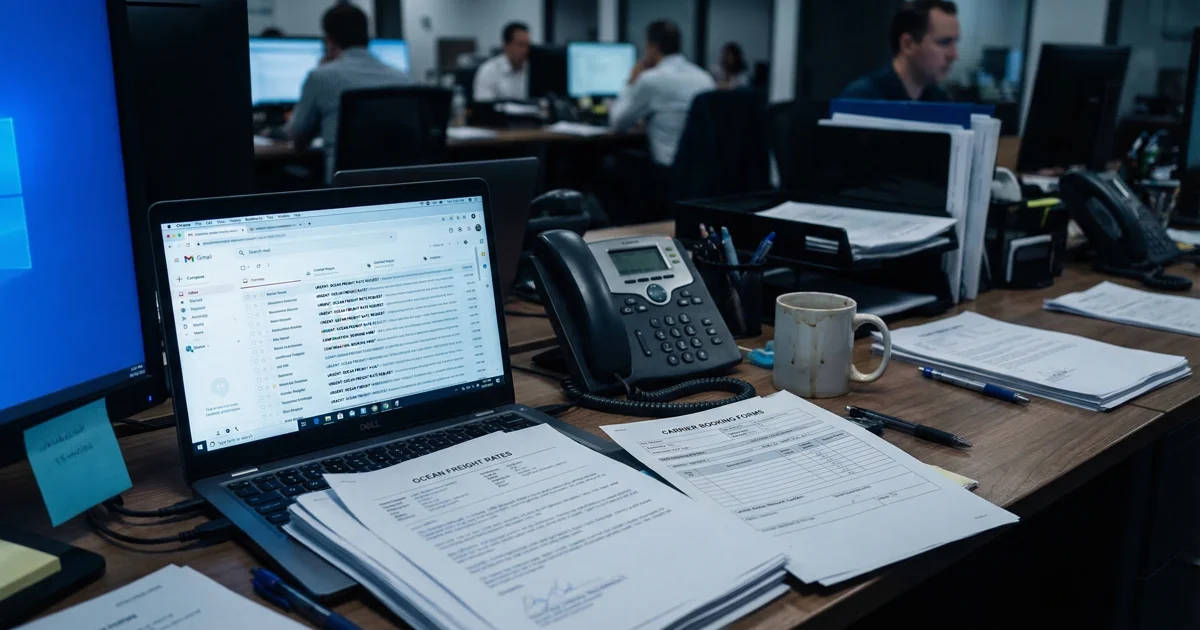
A bad sea freight quotation rarely fails because the market moved against you by a few dollars. It usually fails because the request was handled manually, under pressure, with incomplete information, stale rates, and too many hidden assumptions. That is why the real cost of manual quoting is not just a weak price. It is margin leakage, rework, lost credibility, and avoidable operational risk.
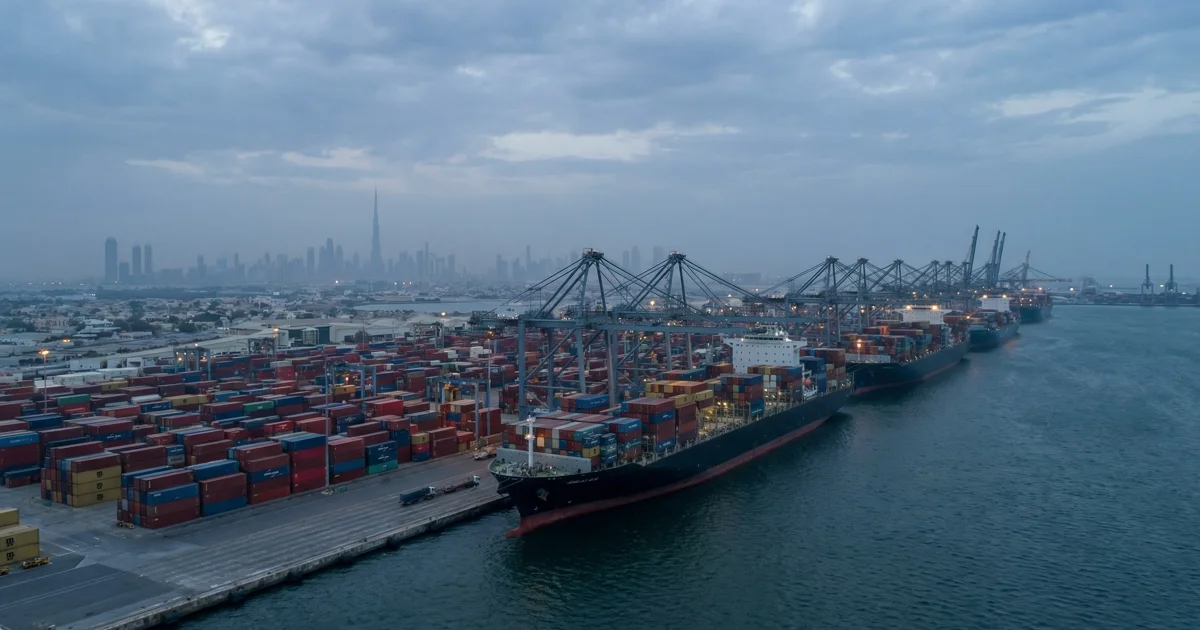
For a freight forwarder in Dubai or the wider MENA market, that problem gets amplified fast. You are often dealing with fragmented local charges, changing carrier validity, FX timing risk, free zone versus mainland documentation, and pressure to answer faster than the desk can actually validate the quote. In that environment, a messy sea freight quotation process does not just create admin pain. It creates commercial mistakes that compound.
This article breaks down the most common manual quoting mistakes, why they keep repeating, and what a cleaner rate request freight forwarding workflow actually looks like when the goal is fewer errors, faster response, and stronger control.
Why rate request mistakes cost more than bad rates
Most teams think quoting mistakes hurt because they make the company look less competitive. That is only part of the problem.
The bigger issue is that manual quoting errors usually hit in three places at once: price, execution, and trust. A missed surcharge weakens margin. A wrong dimension or freight class creates post-booking adjustments. A missing validity date creates arguments after the customer already thinks the number is fixed. One bad ocean freight quote can create a chain of internal work that costs more than the original pricing mistake.
According to industry data from Freightify, preparing one manual quote and checking multiple vendors can take anywhere from 30 minutes to 48 hours. Even if your team operates faster than the top end of that range, the point is obvious: manual quoting is slow enough that errors have time to spread before they are caught. The same vendor data says teams using automated quoting workflows can cut processing time by 92%.
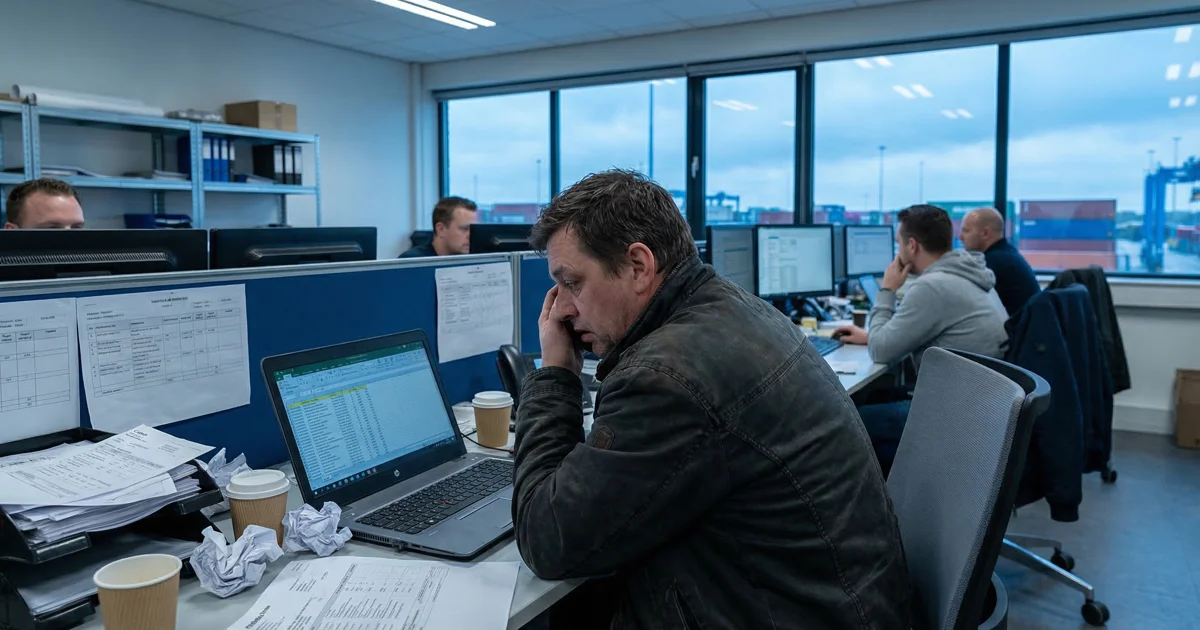
If a team is rushing through 30 rate requests a day, nobody is making one decision. They are making dozens of micro-decisions under time pressure: which carrier rate is current, whether a local charge was already included, whether the request is FCL or LCL but described badly, whether the customer meant FOB or EXW, whether the quoted validity is still real, whether the dimensions are final or estimated.
That is why rate request freight forwarding mistakes cost more than a simple bad rate. They produce downstream problems that hit customer confidence and internal workload at the same time.
The 7 most common mistakes in handling freight rate requests
1. Missing surcharges and local charges
This is one of the most expensive mistakes because it can make a quote look competitive while quietly destroying margin.
According to FreightRate, one of the most common freight quote errors is omitting charges such as ISPS, war risk surcharge, port taxes, or similar accessorials. In Dubai lanes, this problem gets worse because local charges are often fragmented across multiple parties. According to Alliance Shipping's Dubai lane guidance, many shippers focus only on base ocean freight and ignore documentation fees, terminal handling charges, fuel-related surcharges, and seasonal extras.
2. Stale carrier rates and expired validity
This is where speed creates false confidence. A rate found in an old inbox thread may still look plausible, especially on a common lane. But according to FreightRate, outdated supplier rates remain one of the more prevalent quoting errors in freight. And according to Anderinger, carriers that once gave validity windows of months may now issue quotes with validity of only two weeks.
3. Wrong dimensions, weight, or freight characteristics
This is the classic "small input, expensive correction" mistake. Freightquote and C.H. Robinson note that freight billing adjustments usually happen when actual freight characteristics do not match what was quoted. The quoting error often starts before the math. It starts when the team accepts incomplete or vague cargo information because the customer wants a fast answer.
4. Wrong currency handling and FX assumptions
This matters more in Dubai than many desks admit. According to FreightRate, inaccurate currency conversions can create significant financial discrepancies and damage both margins and customer trust. In the UAE context, Dubai Customs notes that the exchange rate at the time of customs declaration submission is what counts for customs charges.
5. Wrong or missing Incoterms
A manual quote can look complete while still being commercially ambiguous. According to Anderinger, shippers need to know which Incoterms apply and make sure the quote includes them before entering a contract. This is one of the most dangerous quote errors because it often stays invisible until execution starts.
6. Typos, copy-paste errors, and product detail mistakes
Manual quoting creates repetition, and repetition creates sloppy errors. Freightquote and C.H. Robinson warn against typos and entry errors on the bill of lading and related shipping documents. But the problem begins earlier than the BOL — it begins in the quote itself: wrong vessel assumption, wrong transit line, wrong volume copied from an earlier file.
7. Incomplete shipper information and wrong classification
This is the root mistake behind many of the others. According to Anderinger, incomplete or inaccurate information on freight quotes can lead to lost money, delays, customs issues, fines, and penalties. A wrong HS code or misclassified item can lead to reclassification fees, delay, or refusal. If the request is weak, the quote becomes fragile.
Dealing with the same challenge?
Book a free 30-min call — we'll map your email workflow together.
Book a Free Call →What a clean rate request workflow actually looks like
The solution is not "be more careful." That is not a workflow. That is wishful thinking.
A clean rate request freight forwarding workflow has four layers, and each one exists to eliminate a different class of mistake.
1. Standardized intake
The first job is to stop incomplete requests from becoming quote work. The team should not begin pricing until it has the minimum usable set: origin and destination, cargo dimensions and weight, commodity details, Incoterms, equipment assumptions, service requirement, and timing / cargo ready date.
2. Centralized rate logic
A clean workflow uses one current logic source for carrier rates, local charges, validity, margin rules, and known exceptions. The point is reducing dependence on memory and private spreadsheets.
3. Validation and approvals
Not every quote needs the same level of review. But every desk needs explicit validation gates. A clean workflow should force key questions before the customer sees the number: Is the rate still valid? Are surcharges complete? Is currency correct? Are Incoterms clear?
4. Execution handoff without re-keying
A quote should not die as a standalone document. The last layer is controlled handoff into booking, execution, and recap without the team retyping the same details into multiple systems or templates. A clean workflow treats quoting as the first operational data object, not just the first customer-facing email.
How Dubai forwarders handle rate request volume at scale
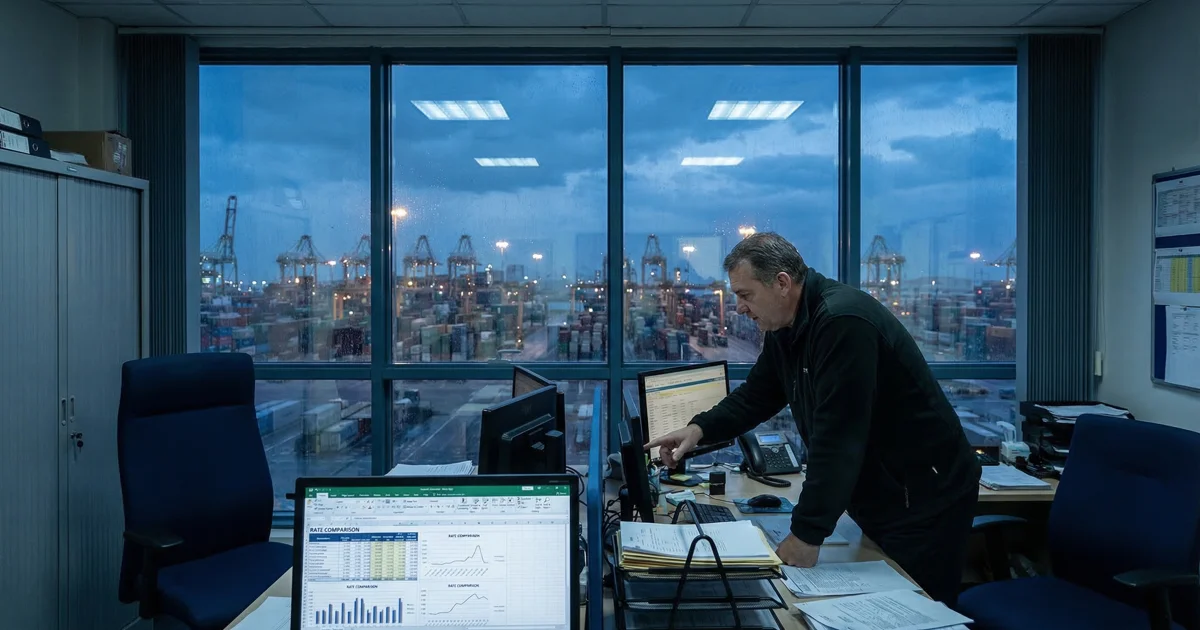
Dubai adds its own pressure to the quoting problem. This is not a market where forwarders deal with one clean charge structure and one customs path.
1. FX timing risk
Dubai Customs uses the exchange rate at the time of customs declaration submission. If the quote desk is applying rough currency assumptions with no validity discipline, margin can move underneath the quote.
2. Local charge fragmentation
Base ocean freight is only one piece of landed cost. THC, documentation, fuel surcharges, port extras, and local handling can be split and updated unevenly.
3. Peak season surcharge exposure
Peak surcharges are especially common from September through November when container space tightens. A desk working from older assumptions can easily quote yesterday's logic into today's peak market.
4. Ramadan SLA compression
Ramadan and Eid periods tighten feeder slots and require longer forward planning. Operationally, Ramadan also compresses the effective working day.
5. Free zone versus mainland document forks
Movement from free zone to mainland may require a different customs declaration treatment. A quote can be commercially correct and still operationally incomplete.
6. Compliance pre-check blind spots
Restricted goods may require approvals before release. If a desk quotes before checking whether restricted-authority approvals apply, the customer may be pricing a move that cannot proceed cleanly.
The hidden pattern: why the same mistakes keep repeating

The same quote mistakes keep repeating because most teams think the problem is human carelessness. It is not. The deeper pattern is structural.
Manual quoting creates the same error conditions every day:
- Requests arrive incomplete
- Rates live in too many places
- Staff depend on memory for exceptions
- Approvals happen inconsistently
- Quote details get retyped multiple times
- Local charge logic changes faster than templates do
If those conditions stay the same, the same mistakes will keep coming back under different names. This is also why training alone rarely solves the problem. Training matters, but training inside a weak workflow mostly teaches people how to survive the same friction.
A strong desk stops asking "Who made the error?" as the first question. It starts asking: Why was the bad field allowed in? Why was stale rate logic still reachable? Why was a quote sent before validation? That is the hidden pattern. Repeated quote mistakes are usually workflow design failures wearing a human face.
For break bulk and project cargo, this pattern is even more pronounced because every quote involves custom feasibility checks that generic tools cannot handle.
Quick checklist: audit your rate request process today
Use this checklist to answer one question: is your current rate request process creating avoidable quote errors?
- Do rate requests still arrive without required fields such as dimensions, weight, commodity, or Incoterms?
- Do staff still copy rates manually from email threads or private spreadsheets?
- Are local charges, surcharges, and validity dates stored in more than one place?
- Can a quote go out without a clear currency assumption or validity date?
- Do free zone versus mainland requirements get checked before the quote is sent?
- Does the desk rely on individual memory for exception lanes, peak surcharges, or customer-specific rules?
- Are quote details retyped into multiple documents after pricing is finished?
- Are approval rules based on margin risk, customer type, or exception logic — or are they ad hoc?
- During Ramadan or peak periods, does quote quality visibly drop?
- When errors happen, do you fix the workflow — or just fix the one quote and move on?
If you answered "yes" to three or more, the desk is probably carrying more quote error risk than it should. And if you answered "yes" to five or more, the issue is no longer about individual discipline. It is about process design.
FAQ
What is the most common mistake in a sea freight quotation?
The most common mistake is usually incomplete or inconsistent charge logic — missed surcharges, stale rates, unclear validity, or cargo details that were never fully validated.
Why do freight rate quotes go wrong so often when handled manually?
Because manual quoting combines incomplete customer input, scattered rate sources, copy-paste work, and rushed approvals. The quote is rarely wrong for one reason only.
How long does a manual ocean freight quote usually take?
According to industry data from Freightify, one manual quote can take anywhere from 30 minutes to 48 hours depending on vendor checking and workflow complexity.
What should a rate request freight forwarding workflow include?
At minimum: standardized intake, centralized rate logic, validation and approvals, and clean handoff into execution without re-keying the same data multiple times.
Why is Dubai more exposed to freight quote mistakes?
Because the market adds FX timing risk, fragmented local charges, peak season surcharges, Ramadan timing pressure, free zone versus mainland documentation forks, and compliance checks that can affect quote accuracy before booking even starts.
Conclusion
Most manual quote mistakes are not random. They come from predictable workflow gaps: weak intake, stale rate logic, missing validation, and sloppy handoff. That is why a bad sea freight quotation often costs more than a slightly bad rate. It creates rework, margin leakage, and operational problems that should never have made it to the customer.
For forwarders handling high rate request volume in Dubai and MENA, fixing quote quality is not about making the team work harder. It is about making the process harder to break.