📌 Key Takeaways
- TMS = system of record. Email = system of action. They solve different problems.
- 83% of quote requests still arrive in the inbox — not in the TMS
- A TMS handles structured records well but cannot manage messy inbound interpretation
- Six reasons freight still runs through inboxes: unstructured requests, universal channel, exceptions, customer conversation, internal fragments, in-between states
- Dubai teams feel this gap most due to multilingual comms, WhatsApp duplication, and Ramadan compression
Your TMS cost serious money to implement.
Your team still runs freight through hundreds of emails a day.
Most forwarders never stop to connect those two facts.
They assume the first investment should have solved the second problem. It did not. And it was never really designed to.
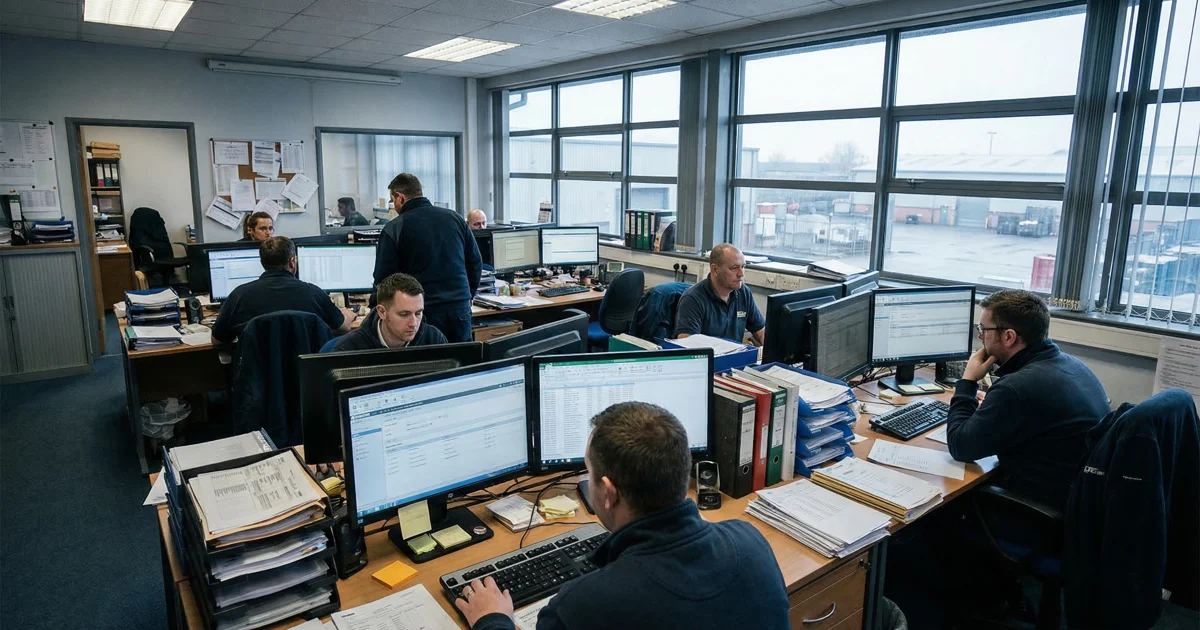
That is the uncomfortable truth behind a lot of disappointed freight teams. They bought a freight forwarding TMS to bring structure into the business. They expected more control, cleaner processes, and less chaos. What they got was something useful — but different. The TMS became the system of record. The inbox stayed the system of action.
That distinction matters more than most people realize.
A TMS can store bookings, rates, documents, invoices, references, and milestones. It can help generate paperwork, hold master data, and support quoting from stored rates. What it usually does not do well is handle the messy human layer that still drives day-to-day freight coordination: incomplete inbound requests, exception follow-up, document chasing, carrier clarification, internal alignment, and customer communication under pressure.
This article takes a clear position: TMS = system of record. Email = system of action. If you do not understand the difference, you will keep buying more forwarding software while the real coordination problem stays exactly where it was — inside the inbox.
What your TMS was actually built to do
A lot of the frustration around TMS comes from expecting it to do a job it was not built to do.
Most freight teams buy a TMS for the right reasons. They want consistency. They want a central record. They want less scattered information. They want cleaner booking flow, document generation, and invoicing.
And in those areas, a good freight forwarding TMS can be genuinely useful.
At a practical level, a TMS is usually strong at five things:
1. Quoting from stored rates
If your desk works on repeat lanes with reasonably structured rate logic, a TMS can speed up the creation of quotes from stored data. It can reduce repetitive entry and make common pricing workflows easier to reproduce.
2. Booking and shipment records
This is the classic TMS strength. Once the shipment exists as a structured job, the TMS becomes the home for references, milestones, parties, status, and operational records.
3. Document generation and storage
Many systems are good at producing standard documents, storing shipment paperwork, and keeping an auditable record of what belongs to each file.
4. Tracking and milestone visibility
The TMS can help teams and managers see whether a shipment has been booked, gated in, cleared, rolled, delivered, or invoiced. It creates visibility around the shipment record.
5. Billing and operational history
This is where the system of record concept matters most. A TMS is good at storing what happened, when it happened, and what should be billed or reconciled later.
That is real value. The mistake is not using a TMS. The mistake is imagining that because it does these things well, it must also solve the communication layer around them.
It usually does not.
And that is not a software failure. It is a category misunderstanding.
Where TMS stops and email takes over
Here is the simple version:
The TMS works best after the shipment is structured.
Email dominates before, between, and around the structured steps.
That is why so many teams still feel like the business is being run out of the inbox even after implementing strong freight logistics software.
The messy reality starts before the clean record exists.
According to Sedna and ECU-aligned industry data, 83% of quote requests still arrive in the inbox. That means most demand does not start as clean system input. It starts as messy text, attachments, screenshots, partial forwarding chains, short customer messages, and vague requests missing key fields.
This is where TMS stops and email takes over.
The TMS does not naturally solve:
- inbound email parsing
- pre-shipment interpretation
- deciding what the customer actually means
- sorting incomplete requests from workable ones
- exception coordination across teams
- customer-facing communication during uncertainty
And that matters because real freight work does not happen only after the shipment has become a clean database entry. Real freight work happens in the messy front-end interpretation layer.
The same issue continues after the shipment is live.
The TMS may show that a milestone changed. The customer still writes asking, “What does this mean?”
The system may show a document exists. Ops still has to chase whether the correct version was sent.
The job may be in the system. The coordination still happens in inboxes, forwarded threads, and side clarifications.
This is why teams feel like they have both structure and chaos at the same time.
They do.
The TMS owns the structured record.
The inbox owns the living work around it.
Dealing with the same challenge?
Book a free 30-min call — we'll map your email workflow together.
Book a Free Call →The six reasons freight still runs through inboxes

If TMS and other forwarding software have existed for years, why does so much freight still run through inboxes?
Because email survives where freight is still ambiguous, human, and exception-heavy.
There are six main reasons.
1. Requests arrive unstructured
The freight world still begins with messy input.
A customer does not always send origin, destination, weight, dimensions, commodity details, and incoterms in a neat form. They forward a chain. They attach a PDF. They write three lines and expect the desk to figure it out.
Email remains the default landing zone because it tolerates ambiguity.
This point is backed by the research more strongly than many teams realize. If 83% of quote requests arrive through inboxes, then the problem is not edge-case behavior. It is the dominant commercial front door. That means the first operational step in freight is still being handled in a medium built for conversation, not structure.
2. Email is the easiest universal channel
Everyone has email. Customers use it. Carriers use it. agents use it. internal teams use it. No training is required, no special workflow has to be explained, and no one needs to adopt a new behavior for one request to move.
That convenience is exactly why it becomes dominant.
The problem is that universal convenience creates local inefficiency. One party uses email because it is easy for them, but every other party downstream pays the price in interpretation, forwarding, checking, and re-keying.
3. Freight exceptions do not fit rigid forms well
A structured system works best when the work itself is structured.
But freight often depends on things that do not fit cleanly into fields: carrier caveats, document ambiguity, handling assumptions, relationship nuances, shifting customer urgency, internal judgment calls, and context that lives in conversation rather than in neat system logic.
Email absorbs that messy coordination because it is flexible.
This is why exception-heavy forwarding work keeps escaping the TMS layer. The system may hold the shipment record perfectly, but the actual decision-making still happens in free text, forwarded threads, and side explanations.
4. Customers want conversation, not just data entry
Customers often do not want to submit a sterile form and wait. They want to ask. Clarify. Add context. Signal urgency. Push a relationship. That is another reason the inbox remains central. It lets the commercial and operational layer stay human.
And this matters more in freight than in many other industries because a large part of service quality is still interpreted through responsiveness and tone. Many customers are not asking only for a rate. They are checking whether they can rely on the desk.
5. Internal teams still coordinate through fragments
One of the least admitted reasons is that forwarders often use email because their internal alignment is still fragmented. Sales, pricing, ops, customer service, and finance all need slightly different views of the same issue. Instead of one clean shared motion, the business creates side threads.
Research on trade complexity supports why this persists. A single trade shipment can involve 36 original documents, 240 copies, and 27 entities. Once that level of complexity exists, it becomes easy for teams to default to the inbox simply because it is the fastest shared surface for pushing fragments around. That does not make it efficient. It makes it survivable.
6. The real work happens between system states
This is the biggest reason of all.
Freight is full of in-between moments:
- before the request is usable
- before the booking is confirmed
- before the document is final
- before the exception is understood
- before the customer knows what a delay means
Those in-between moments are where email still wins. Not because it is efficient, but because it is flexible enough to hold uncertainty.
That is why freight still runs through inboxes. Not because forwarders love chaos. Because uncertainty still needs somewhere to live.
And until businesses deliberately design for that uncertainty layer, the inbox will keep filling the gap regardless of how much formal workflow technology sits beside it.
What "fixing email" actually looks like
The answer is not “replace email.” That is lazy thinking.
The real answer is to stop forcing email to act as your workflow, your interpretation layer, your task queue, and your customer communication model all at once.
Fixing email actually means separating those jobs.
A stronger model usually has four layers.
1. Interpret inbound requests early
The first thing the business needs is a way to turn inbound email into structured work as early as possible.
Not every incoming message deserves the same path. Rate requests, booking confirmations, status questions, document corrections, and commercial exceptions should not all land in the same mental queue.
2. Reduce unnecessary email at the source
The biggest win is not replying faster forever. It is preventing avoidable messages.
If customers are emailing only to ask for basic status, basic document copies, or predictable updates, that is a design problem. The business should reduce those touches at source rather than celebrate faster replies.
3. Keep communication attached to the shipment context
A big reason email becomes painful is that context breaks apart. The operator has to rebuild the story from multiple threads.
Fixing email means making it easier to see:
- what the shipment is
- what happened recently
- what documents matter
- what the customer has already been told
- what still needs action
4. Treat customer communication as a separate layer of execution
This is the part many teams miss.
The customer does not care that the milestone exists in a TMS. They care that someone explains the implication. Fixing email means recognizing that customer communication is not a side effect of the system of record. It is its own execution layer.
That is where many freight teams need to shift their thinking.
Do not ask, “How do we get all email into the TMS?”
Ask, “How do we stop the inbox from carrying work it should never have been carrying?”
That is a very different question.
Why Dubai freight teams feel this gap most

Dubai makes the TMS-versus-email gap much more visible because the communication layer is stretched across more complexity.
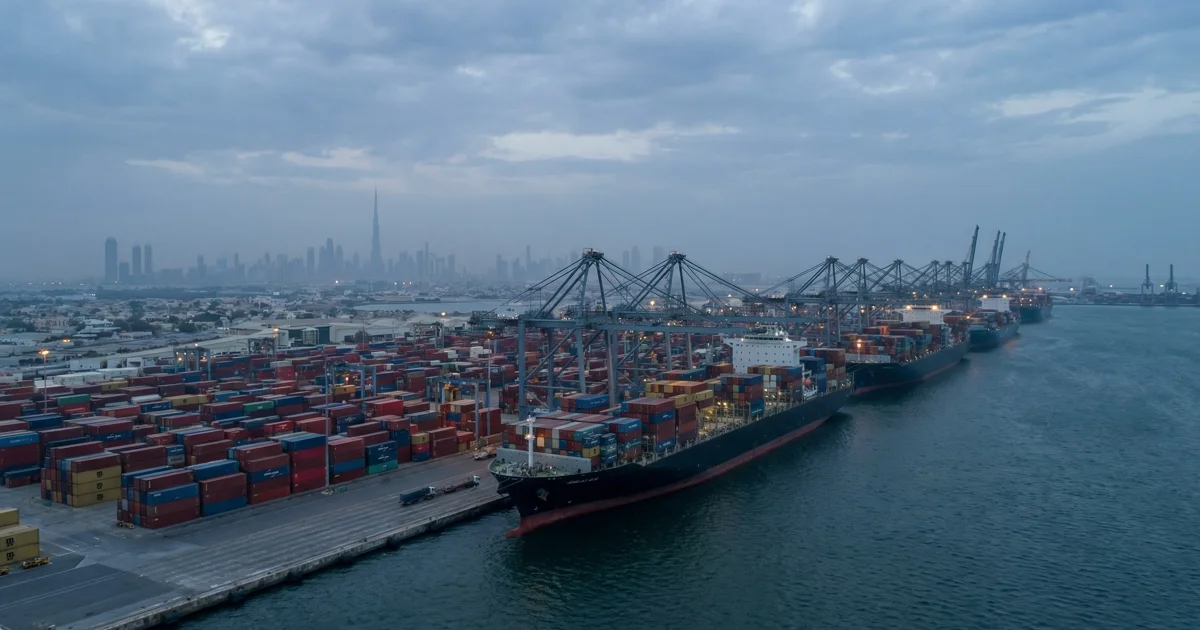
You are not dealing with one clean domestic workflow. You are often dealing with Jebel Ali, JAFZA, Dubai South, customs paths, free zone versus mainland distinctions, multilingual communication, regional trucking, GCC connections, and customers who expect fast acknowledgment even when the operational answer is still developing.
That means the system of record becomes necessary — but even less sufficient.
A Dubai freight team may have the shipment structured inside the TMS and still be stuck in a live coordination mess outside it:
- customer asking on email for update
- sales asking ops on side channel
- customs clarification pending
- carrier confirming cut-off change
- trucking timing changing the practical outcome
- WhatsApp duplicating the urgency of what was already emailed
Ramadan amplifies this even more. Reduced effective working hours do not remove operational pressure. They compress it. So the same inbox load, customer expectation, and coordination demand now have to fit into a smaller communication window.
This is why Dubai teams feel the gap more intensely than simpler markets. Not because they have worse tools, but because they have more handoffs, more channels, and less tolerance for silence.
A freight forwarding TMS helps record the operation. It does not automatically hold together the communication complexity around it.
Dubai also has another issue many teams do not admit openly: the local stack often becomes layered instead of unified. A desk may use CargoWise or another TMS as the formal system of record, rely on Dubai Trade or customs-related portals for transaction and document steps, coordinate exceptions through email, and then duplicate urgency through WhatsApp because customers or internal teams expect immediate acknowledgment. Each layer may be useful. Together, they create a fragmented communication surface.
That is why a Dubai desk can be “fully systemized” on paper and still feel operationally messy in reality. The shipment record may be controlled. The human coordination layer still is not.
The real question to ask before buying more software
Most freight teams ask the wrong question.
They ask:
Do we need another system?
A better question is:
What part of our work is still living in email, and why?
That question gets much closer to the truth.
Because if your team still handles quote interpretation, exception coordination, document clarification, and customer communication mainly in inboxes, then buying more freight logistics software may only add another layer of storage — not another layer of execution.
Before buying anything else, ask six harder questions:
- What part of our work starts outside structured systems?
- Where do requests become ambiguous or incomplete?
- Which emails are actually avoidable?
- Where are we using people to compensate for process gaps?
- Which customer questions exist only because communication is weak?
- Are we trying to make the TMS solve a problem that belongs to the email layer?
If those answers are uncomfortable, good. They should be.
Because that is the real strategic decision point.
Not whether the business needs “more software.”
Whether the business understands what the current stack was built to do — and what it was never designed to fix.
That is the central thesis again, because it matters:
TMS = system of record. Email = system of action.
Until freight teams build for both layers consciously, the same frustration will keep repeating. The TMS will keep storing the truth. The inbox will keep running the day.
FAQ
Why doesn’t a freight forwarding TMS solve email overload?
Because a TMS is built to hold structured records — shipments, bookings, rates, documents, milestones, billing. Email overload usually comes from unstructured work: inbound requests, clarifications, exceptions, document chasing, and customer-facing explanation.
What is the difference between a TMS and the email layer?
The TMS is the system of record. The email layer is where the business still interprets, coordinates, clarifies, escalates, and explains. One stores the truth. The other carries the live action around that truth.
Why do forwarders still rely on inboxes if they already use forwarding software?
Because email remains the easiest universal channel for customers, carriers, and internal teams. It handles ambiguity well, even though it handles workflow badly.
Why is this problem worse in Dubai?
Because the communication layer is stretched across more handoffs: Jebel Ali, JAFZA, Dubai South, customs paths, free zone versus mainland distinctions, regional transport links, multilingual communication, and channel duplication through WhatsApp.
What should a freight team fix before buying more software?
It should identify what work still lives in the inbox, why that work cannot currently move into a cleaner workflow, and which parts of the communication load are actually preventable.
Conclusion
A TMS is valuable. It just does not solve the inbox by default.
That is not a failure of the category. It is a failure of expectation.
If you expect a freight forwarding TMS to absorb quoting ambiguity, inbound email interpretation, live exception handling, and customer reassurance, you will almost certainly be disappointed. Those are not record problems. They are action-layer problems.
And that is why so many freight teams still feel chaotic even after major investments in forwarding software. They improved the system of record without fixing the system of action.
See how Quantika handles the email layer your TMS misses
https://quantika.org