📌 Key Takeaways
- The global breakbulk shipping market was valued at $15.8B in 2024, projected to reach $21.6B by 2030
- Purpose-built break bulk shipping tools for freight forwarders barely exist
- Most breakbulk desks still run on Excel, email, shared folders, and individual experience
- Jebel Ali handled a record 630,000 tonnes of breakbulk in October 2025
- The real gap is not another generic transport system — it's tools that understand how break bulk cargo is quoted, validated, and executed
Breakbulk is one of the biggest blind spots in freight tech.
If you work in container freight, you can find rate tools, schedule tools, visibility tools, booking tools, and platforms promising faster quoting. In breakbulk, the reality is very different. The freight forwarder handling project cargo, heavy lift, or non-containerized cargo is still working with email threads, Excel sheets, phone calls, drawings, and handwritten assumptions. That is not because break bulk teams are old-fashioned. It is because the problem itself is structurally different.
This article makes one core argument: the real market gap in break bulk shipping is not another generic transport system. It is the lack of tools that understand how break bulk cargo is actually quoted, validated, and executed. And if you are running a project cargo freight forwarding desk in Dubai, that gap is already costing you time, control, and margin.
Why break bulk is the blind spot in freight tech
Most freight software has been shaped by container logic.
That means standard lanes, standard equipment, standard rate structures, and relatively repeatable workflows. But breakbulk does not work like that. There is no universal rate card. There is no clean one-size-fits-all quoting form. There is no standard box to load and move. Every serious request pulls the team into a custom commercial and operational exercise.
That is exactly why break bulk has become the blind spot in freight tech. The market is real, active, and growing, but the tool layer has not caught up. According to industry data from Strategic Market Research, the global breakbulk shipping market was valued at USD 15.8 billion in 2024 and is projected to reach USD 21.6 billion by 2030, growing at a 5.3% CAGR.
And yet, when you look for actual break bulk shipping tools for freight forwarders, the landscape is shockingly thin. The only clearly identified specialist product in this research was Autoship / NAPA, and even that is vessel-side stowage planning software, not a freight forwarder quote-to-execution tool.
The practical result is simple: break bulk desks operate in a high-stakes environment with tool support that still looks like 2012.
What makes break bulk quoting different from containers
A container quote is usually a pricing exercise. A breakbulk quote is a pricing-and-feasibility exercise.
That distinction changes everything.
In container freight, a lane often starts from known units and known commercial structure: per container, per lane, with standard surcharges layered on top. In break bulk shipping, the quote may be based on per-CBM, per-ton, W/M, or a lump-sum project structure. The freight desk is not just pricing transport. It is testing whether the move is commercially and physically workable.
That means the quote depends on details that container tools are not designed to handle well:
- Exact dimensions and weight distribution
- Stowage and lashing requirements
- Crane capacity at actual working radius
- Berth and port capability
- Breakbulk vessel suitability
- FIO, liner terms, and responsibility split
- Laycan timing and synchronization across parties
- Special handling equipment, MAFI, or RoRo alternatives
According to MOL Logistics Group, crane capacity is a perfect example of why break bulk quoting is different. The company notes that even if a crane is rated at 20 tons, that does not mean it can lift 20 tons under all conditions. Working radius changes the real lifting capacity. That is not a pricing footnote. That is core quote validity.
This is why break bulk cargo quoting feels slow, manual, and operationally heavy. It is not just because teams are using Excel. It is because every quote is partly an engineering judgment — and slow quoting has a real cost.
Dealing with the same challenge?
Book a free 30-min call — we'll map your email workflow together.
Book a Free Call →The tools break bulk teams actually use today (and why they fall short)
If you ask what tools a break bulk desk uses today, the honest answer is usually a stack of workarounds.
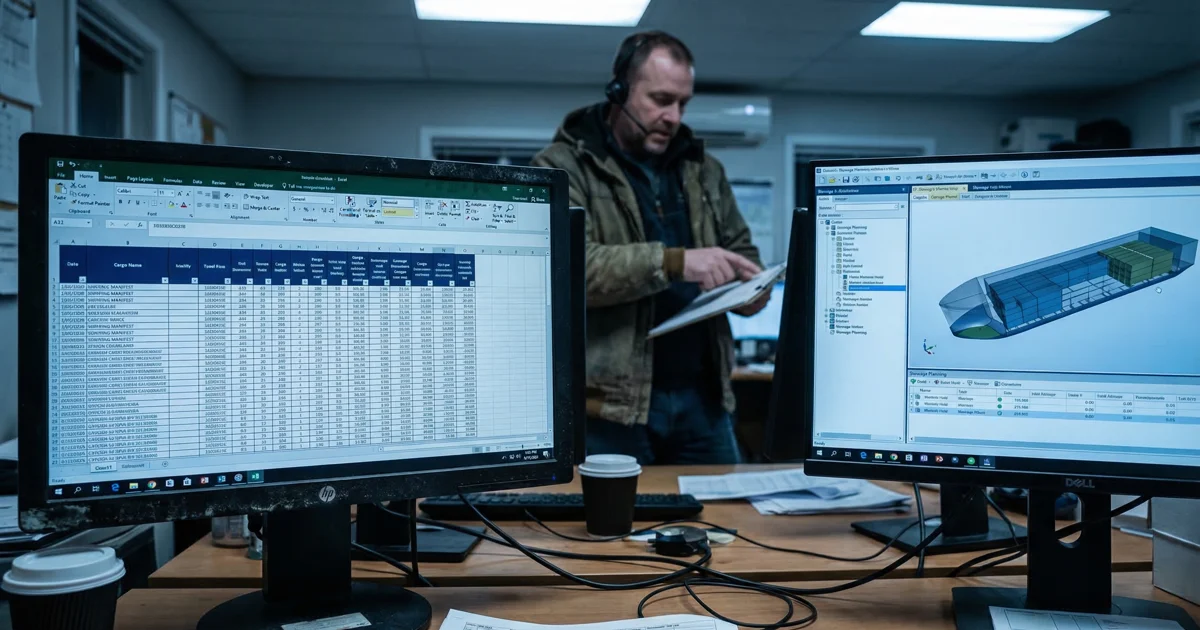
The typical environment looks familiar:
- Excel for cargo dimensions and rate normalization
- Email for carrier offers and internal coordination
- Shared folders for drawings, photos, and recaps
- PDF recaps for customer and partner communication
- Phone and WhatsApp for clarifications and last-minute changes
- Experience in people's heads for the final commercial call
This stack works just well enough to survive, which is why it persists. But it falls short in exactly the places where break bulk teams lose money.
1. Manual offer normalization
According to Voyager Portal, carriers respond to project and break bulk requests inconsistently, which increases the effort required to handle specs and compare responses. If five carriers reply with five different assumptions, five different charge structures, and five different degrees of technical completeness, the desk cannot compare apples to apples. Someone has to normalize the responses by hand — a classic rate request mistake that compounds at scale.
2. Feasibility surprises
Commercial teams often quote first and validate handling later. That creates expensive rework. A rate may look acceptable until someone checks crane reach, berth strength, discharge capability, or stowage limitations.
3. Stowage bottlenecks
Stowage is not a downstream paperwork issue. It is a core planning bottleneck. If the team cannot quickly understand whether the cargo can be stowed safely and economically, the quote either slows down or goes out with hidden risk inside it.
4. Laycan and coordination risk
Break bulk moves do not fail only on price. They fail on timing. Cargo readiness, vessel availability, customs, cranes, labor, and port windows all need to line up closely enough to make the move executable.
5. Tool mismatch
The biggest structural issue is still the same: most tools available to forwarders were not designed for breakbulk. They may help at the edges, but they do not reflect the actual commercial-operational flow of a break bulk desk.
What a purpose-built break bulk workflow looks like
If break bulk teams do not really have purpose-built tools, the next best question is more useful: what should a purpose-built workflow actually look like?
A strong break bulk workflow should start by treating the RFQ as more than a price request. It should treat it as a structured case that moves through commercial, technical, and execution checks in one connected motion.
That workflow should include at least six core layers:
1. Structured cargo intake
Capture and standardize dimensions, unit count, center of gravity assumptions, cargo photos, drawings, handling constraints, incoterms, and commercial deadlines from the start.
2. Offer normalization
Carrier and operator responses should be compared in one consistent frame: what is included, what is excluded, what assumptions were made, and what technical constraints sit behind the rate.
3. Feasibility validation
Before the quote leaves the desk, the team should be able to verify port suitability, berth and storage conditions, crane capacity at working configuration, stowage and lashing practicality, and cargo readiness versus laycan.
4. Commercial logic
The system should make it easier to apply markups, FIO assumptions, contingency logic, and partner-specific commercial rules without rebuilding the logic from scratch every time.
5. Recap and approval flow
A quote should convert smoothly into internal recap, customer version, and execution handoff without the team having to duplicate the same information into multiple disconnected documents.
6. Live coordination layer
Because break bulk shipping is inherently multi-party, the workflow must keep commercial and operational status connected. If port feasibility changes, or laycan shifts, or crane availability becomes an issue, the commercial desk should see the impact early — not after the promise is already made. This is where response time discipline becomes critical.
Dubai and the MENA break bulk opportunity
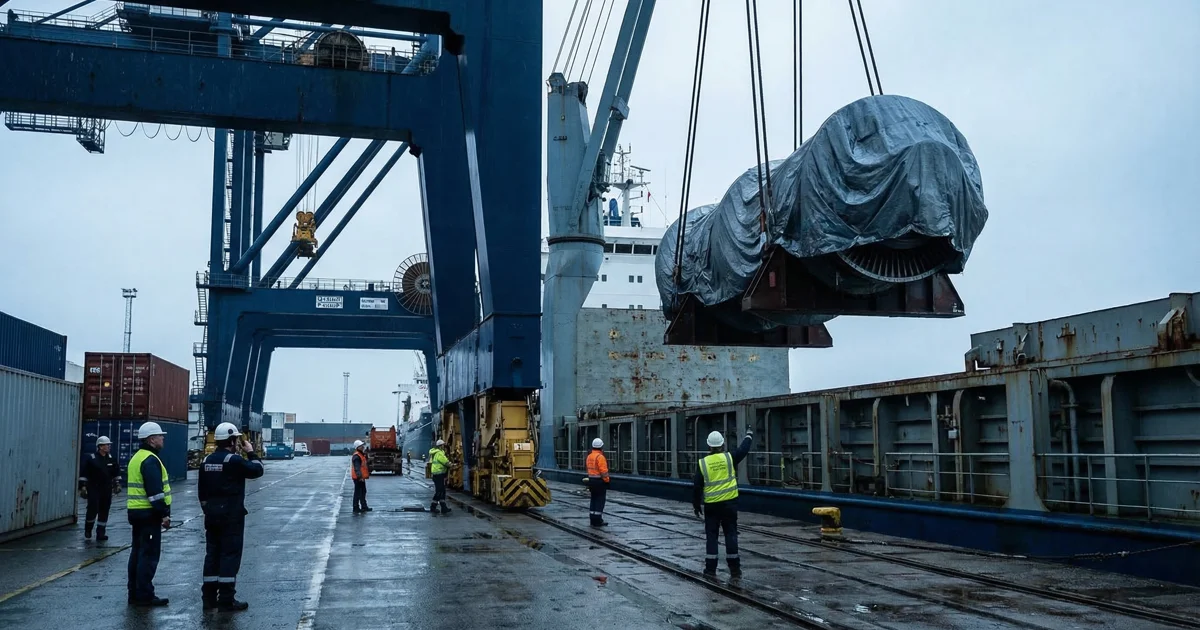
Dubai is one of the strongest places in the world to see why this problem matters now.
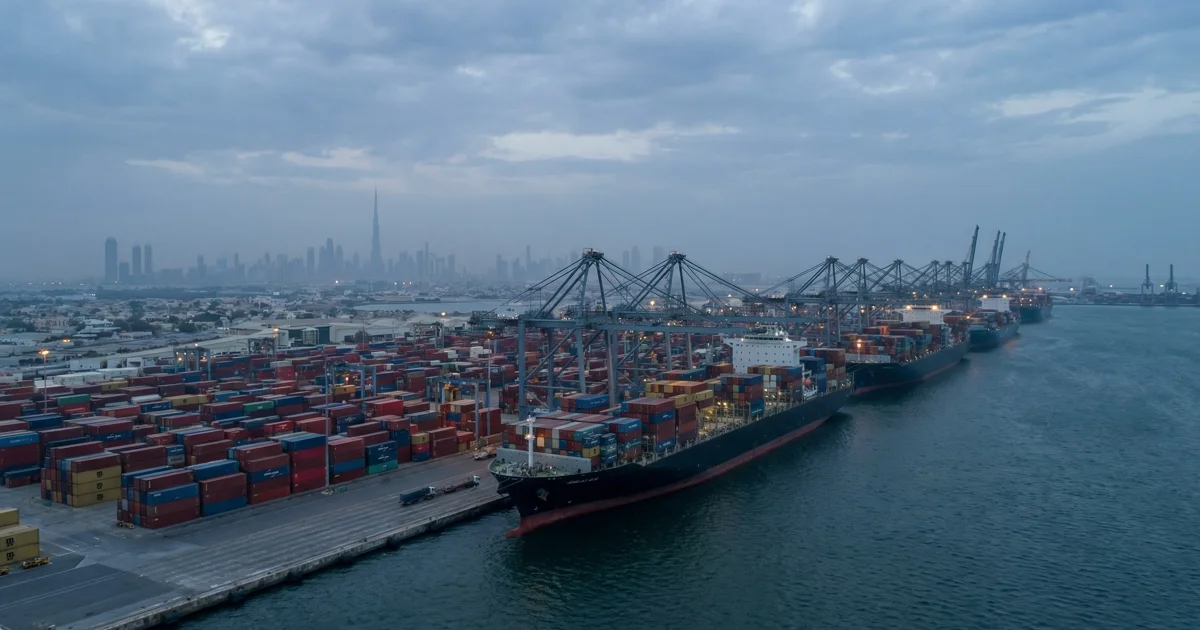
The city is not just a regional freight node. It is a serious break bulk and project cargo hub. According to Breakbulk.com, Jebel Ali Port handled a record 630,000 tonnes of breakbulk in October 2025, the highest monthly total in almost two decades. The same reporting says total volumes reached over 5.67 million tonnes in 2025, up 6% year on year.
That is not abstract growth. That is real project cargo moving through real infrastructure.
Dubai is especially important because it sits at the intersection of several break bulk demand patterns at once:
- Project cargo for oil and gas
- Infrastructure and construction flows
- Heavy industrial imports and exports
- Regional redistribution to Africa, CIS, and South Asia
- Large-format cargo linked to desalination, energy, and industrial projects
The project examples in the research make this tangible. Jebel Ali handled around 70,000 cubic meters of high-pressure vessels and oversized equipment for the Hassyan Desalination Plant. It also exported a 680-tonne ship loader as a single unit. These are not standard forwarding jobs. They are operationally dense, technically sensitive, and commercially risky.
That is why Dubai forwarders cannot rely on generic tools and generic assumptions. The market is too active, too connected, and too technically demanding.
How to evaluate break bulk tools for your team
If the market does not offer many perfect break bulk tools today, that does not mean teams should stop evaluating what they use. It means they need better evaluation criteria.
A better evaluation approach is to ask whether the tool, process, or workflow helps your team make fewer expensive decisions on partial information.
Here are the questions that actually matter:
Can it normalize offers from multiple carriers?
If the answer is no, your commercial team is still doing manual comparison work at the most fragile point in the process.
Can it hold technical cargo data and commercial assumptions together?
If dimensions, photos, crane assumptions, FIO terms, and pricing logic are split across different places, your desk is already vulnerable to recap errors.
Can it support feasibility checks before commercial commitment?
If the workflow encourages quoting first and validating later, the team will keep producing avoidable rework.
Can it reduce recap duplication?
Break bulk desks lose enormous time rewriting the same shipment logic for internal recap, customer version, and execution handoff.
Can it help with timing, not just pricing?
Laycan, equipment, labor, port handling, and cargo readiness are not side issues.
Can it make exceptions visible early?
A strong workflow does not pretend every move is standard. It highlights where the move is non-standard and where senior judgment is needed.
Quick self-audit: is your break bulk desk losing money?
Use this checklist to assess whether your breakbulk desk is leaking margin, speed, or control:
- Do carrier offers arrive in formats that your team still has to normalize manually?
- Do commercial teams sometimes quote before port, berth, or crane feasibility is properly checked?
- Do stowage and lashing considerations enter too late in the quote process?
- Are laycan, cargo readiness, and vessel timing tracked in separate places?
- Do you depend on individual staff memory for key lane or cargo assumptions?
- Does the team retype the same shipment logic into multiple recaps and versions?
- Do quote comparisons still happen in Excel with no shared technical validation layer?
- Do you discover missing assumptions only after the customer has already seen the quote?
- Can one absence on the desk slow down the entire break bulk quote flow?
If you answered "yes" to three or more of these, the desk is probably losing money already. Not always in one dramatic event. More often through small failures: quotes that take too long, avoidable rework, weak margin control, bad assumption handoffs, and execution surprises that should have been visible earlier.
FAQ
What is breakbulk in freight forwarding?
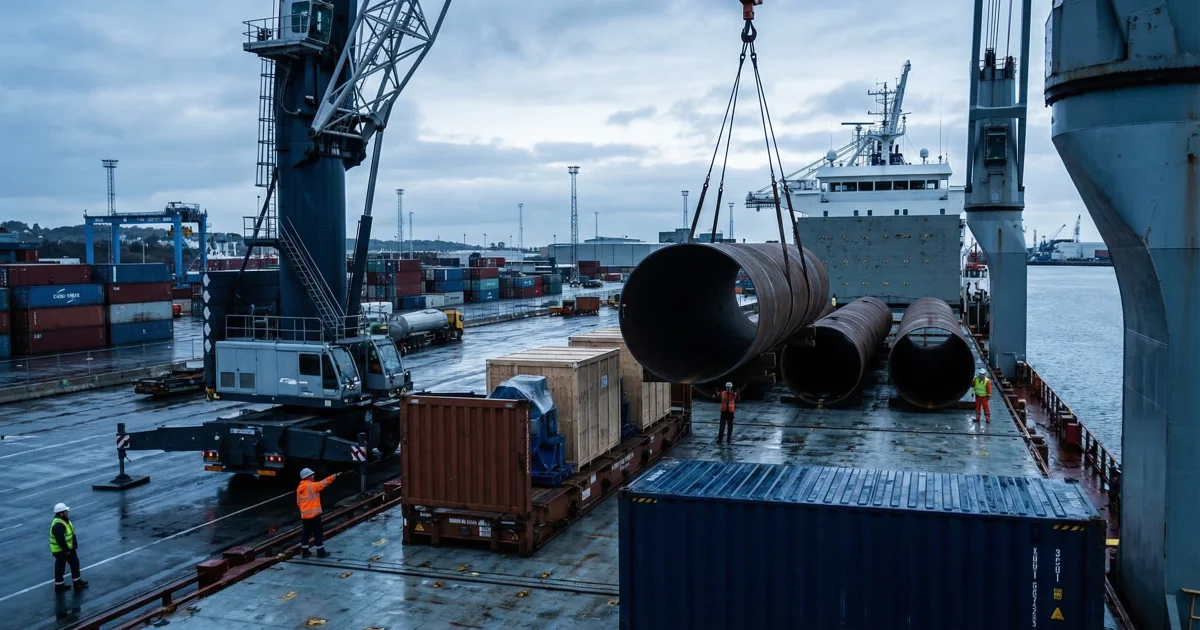
Breakbulk is cargo that is moved as individual pieces rather than inside standard containers. That includes oversized machinery, steel, pipes, turbines, transformers, and other project cargo that often requires custom handling and stowage.
Why is break bulk quoting harder than container quoting?
Because break bulk quoting is not only about price. It also involves feasibility: cargo dimensions, crane limits, port capability, stowage, lashing, laycan, and terms like FIO all affect whether the move is workable.
Are there dedicated break bulk shipping tools for freight forwarders?
Very few. The market has almost no purpose-built break bulk quoting and operations tools for freight forwarders. Most teams still rely on Excel, email, and general-purpose systems with poor fit.
What is the biggest operational risk in break bulk cargo quoting?
The biggest risk is making commercial commitments on incomplete or stale information. That includes incorrect crane assumptions, poor offer comparison, weak port validation, and timing mismatches around laycan or cargo readiness.
Why does Dubai matter so much in break bulk shipping?
Because Jebel Ali is one of the region's major break bulk hubs, with record volume, strong connectivity, and direct exposure to project cargo in oil and gas, infrastructure, energy, Africa, CIS, and South Asia flows.
Conclusion
The biggest problem in breakbulk technology is not that the market has too many tools to compare. It is that freight forwarders still do not have enough purpose-built tools for the real work.
That real work is not just sending a quote. It is normalizing inconsistent offers, validating stowage and crane reality, checking FIO and laycan implications, coordinating multiple parties, and protecting margin before the move even starts.
For teams handling break bulk cargo and project cargo freight forwarding, the current stack of Excel, email, and individual memory is not a strategy. It is a stopgap.
And for Dubai and MENA forwarders, the timing is clear. The market is active, the cargo is getting more complex, and the operational cost of weak workflows is only going up.